

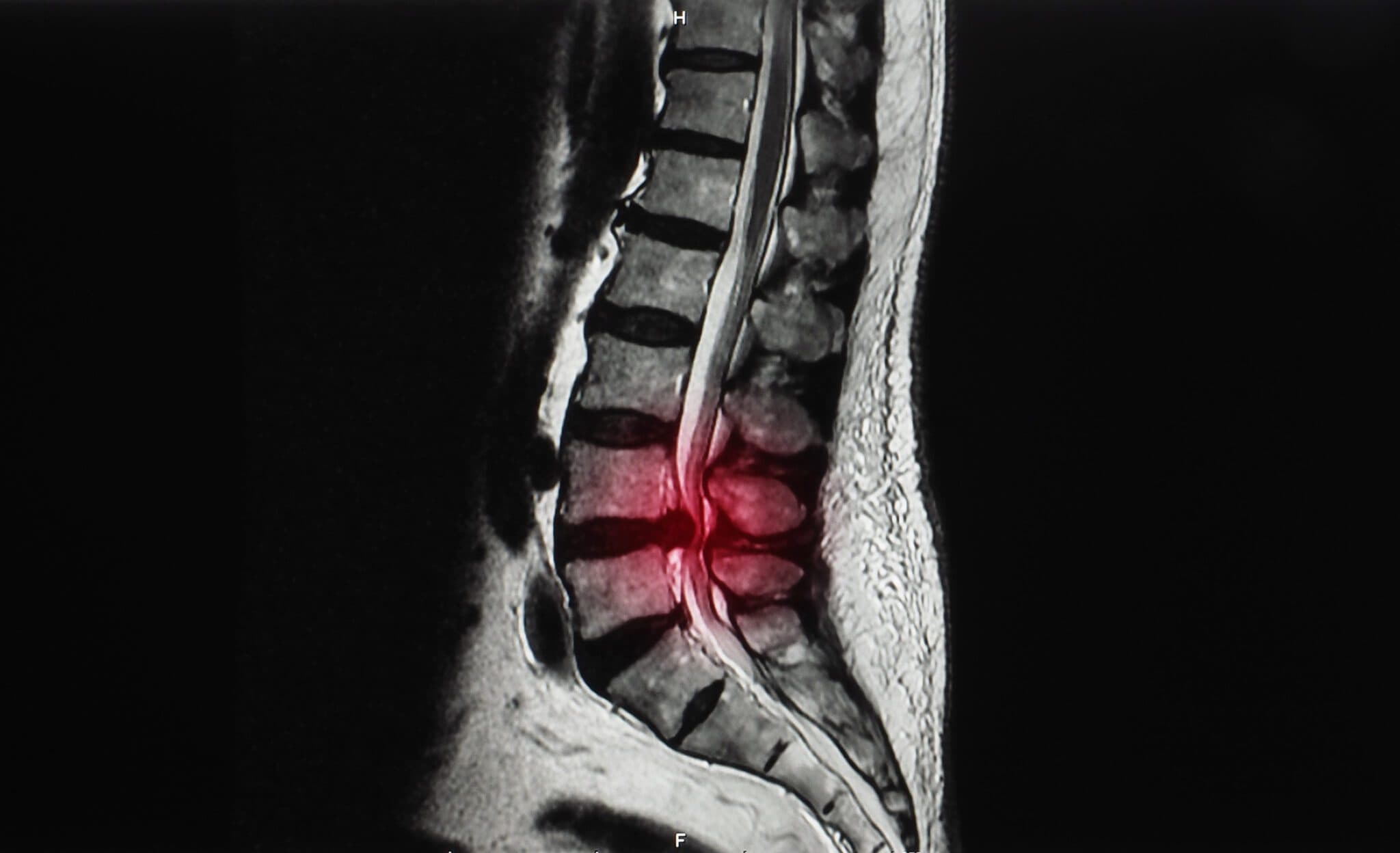
Disc Bulge & Herniation Treatment in Airdrie
Non-surgical treatment for disc bulges, herniations, and pain, numbness or tingling radiating from your back or neck.
Reviewed by Dr. Ryan Lawrence, DC and Dr. Karl Louder, DC
Your spine is made up of bones called vertebrae. Between each vertebra are spinal discs that act as shock absorbers.
When healthy, they give your spine strength and flexibility for everyday activities like tying your shoes or swinging a golf club. When a disc is damaged, the material inside pushes outwards, causing a bulge, rupture, or internal derangement.
A disc bulge means the inner material has shifted outward but stays contained within the disc wall. A disc herniation means that material has broken through the outer wall entirely.
Both can press on nearby nerves and cause pain, numbness, or weakness, though herniations tend to cause more severe symptoms. Disc injuries occur most commonly in the lower back and neck, and occasionally in the mid-back.
Not all disc changes are painful. Many people have findings on imaging with no symptoms at all, and your spine is stronger and more adaptable than you might think.
is that the majority of disc injuries improve without surgery. Recovery involves more than rest. The right combination of movement, education, activity modification, and progressive loading plays an important role in helping you recover with confidence, even if your symptoms have been around for a long time.
Common Symptoms
- Lower back pain, neck pain, or mid-back pain
- Pain travelling into the buttock or leg (sciatica)
- Pain travelling down between the shoulder blades, or down the arm
- Numbness or tingling in the arms or legs
- Muscle weakness such as reduced grip strength or foot drop
- Burning, sharp, or electric-type pain
- Pain with sitting, bending, lifting, coughing, or sneezing
- Stiffness or reduced mobility
- Difficulty standing fully upright, especially after sitting for a while
- Your hips or torso appear shifted to one side when standing
Common Causes
- Repetitive Bending and Lifting: frequent bending, twisting, or being flexed forward for extended periods places increased stress on the discs
- Prolonged Sitting: long periods of sitting, especially with poor posture and limited movement, increases the pressure inside the disc
- Sudden Heavy Strain: heavy lifting, awkward movements, sports injuries, or unexpected strain can irritate a disc (we're talking to you, snow-shovelers and powerlifters!)
- Age-Related Changes: as we age, discs naturally lose some hydration and elasticity, which can lead to decreased mobility and stiffness
- Deconditioning: when we're not physically active, supporting muscles become weaker, making the spine less tolerant to everyday activities
- Previous Injuries: past back or neck injuries can increase sensitivity or contribute to recurring flare-ups
- Lifestyle Risk Factors: smoking reduces disc hydration and healing capacity, poor sleep limits the body's ability to recover, and sudden increases in workload or activity can stress discs that are not yet conditioned for the new demand
Evidence-Based Disc Treatment at Summit Spine Centre
Comprehensive History & Exam
Why did your disc bulge or herniate? Was it an injury, wear and tear, or a problem that's been slowly building? We listen to your story and perform an assessment that tests your capacity and nerve integrity before treating.
Cox Flexion-Distraction
A gentle, evidence-based technique used to decompress and move your discs, relieving pressure on nerves while slowly stretching the tissues. This is a unique way to alleviate disc pressure without sudden movements that might cause increased pain.
Chiropractic Adjustments
When the joints around a disc can't move properly, it places stress on the disc. Targeted adjustments restore movement, allow muscles to relax, and reduce the load on the affected area.
Targeted Exercises
Disc injuries often require specific movements to take pressure off the discs. We base exercises on what positions are most comfortable for you so you can build strength and prevent future injuries.
Lifestyle Modifications
Is most of your day spent sitting at a desk or in a driver's seat? We'll explore what daily activities may have contributed to your disc injury and offer practical advice to reduce ongoing stress on your spine.
Why Choose Summit Spine Centre for Disc Treatment
One of Few Cox-Certified Clinics in Alberta
Cox Flexion-Distraction is an evidence-based technique specifically designed to relieve pressure on discs. We are among the few certified practitioners of this method in Alberta.
Disc Care is What We Do
Disc-related conditions are among the most common concerns we treat. We have helped hundreds of patients avoid surgery and return to the activities they love.
A Recovery Plan, Not Just Pain Relief
Your body is capable of adapting and healing. With proper guidance you can learn how to manage your problem and prevent it from recurring, even if symptoms have been around for a long time.
What to Expect at Summit Spine Centre
Share Your Story
We begin with a detailed conversation about your symptoms and health history, including what happened, how long it's been, and how it's affecting your daily life.
Nerve & Movement Assessment
Orthopedic, neurological, and movement assessments help confirm the extent of disc involvement and guide the safest, most effective treatment approach.
Tailored Care Plan
We explain our findings in plain language and build a plan around your goals and comfort level, including Cox Flexion-Distraction, adjustments, exercises, and lifestyle guidance as appropriate.
Recovery with Confidence
We track your progress and adjust the plan as you improve. If your needs would be better met elsewhere, we'll refer you to the right provider.
What Our Patients Say
“After dealing with neck and back issues for years with little success from other chiropractors and physiotherapists, I started going to Summit Spine Centre after a friend's referral. Their flexion distraction technique has significantly improved my range of motion, and I'm feeling better than I have in years. I'd forgotten what it felt like to move comfortably again.”
Keith B.
Airdrie Patient
“After one month of weekly visits my life is significantly different. My back feels great, I don't grunt and groan when I'm moving, I'm no longer hunched over or constantly protecting myself. I can do things care free like play with my kids, and be present in the moment with them. I'm not nearly as angry or frankly miserable and able to enjoy life again in a way I haven't for some time.”
Justin C.
Airdrie Patient
“This would be 12 stars if I could! Dr. Karl Louder is hands down amazing, and Dr. Ryan Lawrence is pretty amazing too! I have been coming here since 2020. I highly recommend any and everyone to go here for care. Your health is vital and they have played a huge part in my health as well as my husband's. They supported us so deeply while my husband went through cancer treatments. We are so grateful for this place.”
Chelsea D.
Airdrie Patient
Related Conditions
What is the difference between a disc bulge and a disc herniation?
A disc bulge refers to when the disc begins to push outward toward the nerves without rupturing, the "jelly" inside the disc stays inside. A disc herniation occurs when the inner material leaks outside of the disc. Both can cause nerve pain, but herniated discs tend to cause more severe symptoms.
Can a disc bulge or disc herniation heal on its own?
Most disc injuries will heal without surgery. With appropriate movement, activity modification, and conservative care, the body is often capable of adapting and calming sensitive tissues naturally.
Does a disc bulge always cause pain?
No. Many people have disc bulges visible on MRI without any pain or symptoms at all. Imaging findings do not always match symptom severity.
What does nerve pain from a disc injury feel like?
Nerve irritation may cause symptoms such as burning, sharp, electric, tingling, numb, or radiating pain into the arm or leg.
Is walking good for a disc herniation?
For many people, gentle walking can help improve circulation, reduce stiffness, and support recovery. The best activities depend on the individual and the stage of irritation.
Can chiropractic care help sciatica caused by a disc injury?
Chiropractic care may help improve mobility, reduce irritation around sensitive structures, and support recovery in many cases of disc-related sciatica.
When should I seek medical attention for a disc injury?
Immediate medical attention is important if symptoms involve loss of bowel or bladder control, significant or worsening weakness, severe numbness around the groin, or rapidly worsening neurological symptoms.
Do all disc herniations require surgery?
No. Most disc injuries improve with conservative care and do not require surgery. Surgical consultation may be appropriate in certain situations depending on symptom severity, neurological findings, and response to care.
How long does recovery from a disc injury take?
Recovery timelines vary depending on severity and individual factors. Some people improve within weeks, while others may require a longer rehabilitation approach. Severe symptoms may last a number of weeks, but the disc itself may require 3–6 months to fully heal.